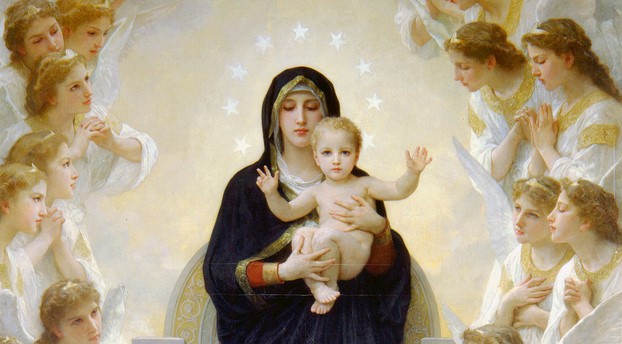
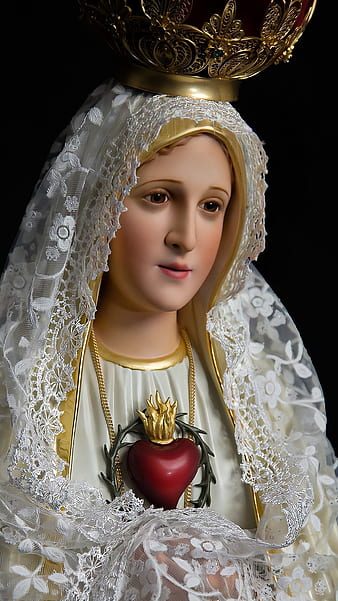
Mary's Role in the Life of Jesus and the Church
Welcome Back.
Updated at: 2023-08-05 13:19:37 (2 years ago by Melkisedeck Leon Shine)
๐ Mary's Role in the Life of Jesus and the Church ๐
Mary, the blessed Virgin Mother, holds a unique and significant role in the life of Jesus and the Church. She was chosen by God to be the vessel through which His Son would enter the world, and her obedience and faithfulness continue to inspire believers today.
As a devout Christian Catholic, I am deeply grateful for the example set by Mary. Her unwavering love and devotion to God's will are truly commendable. ๐
One of the most important aspects of Mary's role is her divine motherhood. She gave birth to Jesus, the Son of God, without losing her virginity. This miraculous event is a testament to her purity and sanctity. ๐น
The Bible clearly attests to Mary's unique role as the Mother of Jesus. In the Gospel of Luke, the angel Gabriel declares, "Hail, full of grace, the Lord is with you" (Luke 1:28). This angelic salutation acknowledges Mary's special favor with God.
Furthermore, Mary's humility is evident when she responds to the angel by saying, "Behold, I am the handmaid of the Lord; let it be to me according to your word" (Luke 1:38). Her willingness to submit to God's plan is an inspiration for all believers. โจ
Mary's role as the Mother of Jesus extends beyond His birth. She was present with Him throughout His life, from His infancy to His crucifixion. Mary's love and support were unwavering, even in the face of immense suffering. ๐
At the wedding in Cana, Mary intercedes on behalf of the wedding party when they run out of wine. Her simple yet powerful words to the servants, "Do whatever He tells you" (John 2:5), demonstrate her unwavering faith in her Son's divine power. ๐ท
The Catholic Church recognizes Mary as the New Eve, who cooperated fully with God's plan of salvation. Just as Eve's disobedience brought sin into the world, Mary's obedience through her "fiat" brought the Savior into the world (CCC 494).
Mary's role in the Church extends to her intercession for the faithful. Catholics believe that Mary, being in heaven, can pray for us and bring our needs before her Son. She is a loving mother, always ready to intercede on behalf of her children. ๐
St. Louis de Montfort, a revered Catholic saint, beautifully captures Mary's role in the spiritual life when he says, "Our entire perfection consists in being conformed, united, and consecrated to Jesus Christ" through Mary (True Devotion to Mary).
The Catechism of the Catholic Church affirms Mary's intercessory role, stating that "her maternal intercession is shown in the Church" (CCC 969). This reminds us that Mary's love and concern extend beyond her earthly life and into the life of the Church.
In the Gospel of John, as Jesus hangs on the cross, He entrusts Mary to the care of the beloved disciple, saying, "Behold, your mother!" (John 19:27). This moment highlights Mary's role as the spiritual mother of all believers, including each one of us. ๐
Mary's life and example of faithfulness challenge us to live a life of surrender to God's will. Her "yes" to God's plan serves as a reminder for us to trust in His providence and embrace His calling in our own lives. ๐บ
Catholics honor Mary with devotion, recognizing her unique and indispensable role in salvation history. By honoring Mary, we honor Jesus, who chose her to be His mother, and we recognize the significance of her intercession in our spiritual journey. ๐
What are your thoughts on Mary's role in the life of Jesus and the Church? How has her example influenced your own faith journey? Share your insights and experiences below! ๐
Updated at: 2025-06-05 11:13:43 (8 months ago by Melkisedeck Leon Shine)
Introduction
The Virgin Mary occupies a position of profound veneration within Roman Catholicism. This article systematically analyzes the theological framework supporting Mary's elevated status, particularly her queenship. We will explore the scriptural basis, the historical development of relevant doctrines, and the implications for Catholic spirituality. Key concepts include Marian doctrines (Immaculate Conception, Perpetual Virginity, Assumption), Christology (the study of Jesus Christ), and the role of intercessory prayer. These will be examined through established theological frameworks, considering the historical evolution of Catholic doctrine and Marian piety. We will leverage concepts from systematic theology, historical theology, and ecclesiology to provide a comprehensive analysis.
1. Mary as Theotokos: The Foundation of Marian Theology
The title "Theotokos," meaning "God-bearer," conferred upon Mary at the Council of Ephesus (431 CE), is paramount. This affirmation of Jesus' divinity establishes Mary's central role in the Incarnation. This christological affirmation, solidified by conciliar pronouncements, highlights the Church's process of clarifying theological understanding through reasoned discourse and scriptural interpretation. The Council of Ephesus exemplifies the application of conciliar methodology in resolving theological disputes and shaping doctrinal development.
2. Perpetual Virginity: Holiness and the Vessel of Salvation
The doctrine of Mary's perpetual virginity, while not explicitly detailed in all biblical passages, is a cornerstone of Catholic belief. This emphasizes her purity and holiness, highlighting her unique role as the instrument through which God entered the world. This illustrates the application of theological interpretation and tradition to build upon scriptural accounts, demonstrating the Church's evolving understanding of Marian theology over centuries. Exegetical approaches to Matthew 1:25 vary, impacting interpretations of this belief.
3. Mary as the New Eve: Redemption and Typological Interpretation
Comparing Mary and Eve provides a powerful theological lens. Eve's disobedience initiated humanity's fall; Mary's obedience, expressed in her "fiat" at the Annunciation, reversed this, initiating salvation through her Son. This utilizes typology, a hermeneutical method identifying parallels between Old and New Testament figures and events. This approach emphasizes Jesus' redemptive work, with Mary playing a vital mediating role. The typological interpretation underscores the overarching narrative of salvation history.
4. The Assumption: Bodily Glorification and the Eschatological Dimension
The dogma of the Assumption (1950) affirms Mary's bodily ascension into heaven. This doctrine, rooted in early Christian tradition and consistent with Christ's resurrection, elevates Mary to unparalleled glory and foreshadows the ultimate destiny of believers. This exemplifies theological reflection, shaped by tradition and scripture, leading to doctrinal development. The papal declaration showcases the role of magisterial authority in clarifying and defining theological concepts to ensure doctrinal consistency across the Church. This act demonstrates the application of Papal Infallibility.
5. Mary's Queenship: Intercession and Advocacy
The title "Queen of Heaven and Earth" reflects Mary's exalted position and her role as intercessor for humanity. This builds upon her role in salvation history. The image of a queen interceding for her people provides a relatable analogy for Mary's advocacy before her Son. While employing this analogy, we must retain the transcendent nature of Mary's queenship, highlighting the creative theological communication of complex truths. This reflects the application of relational theology and kerygmatic preaching.
6. Marian Piety and the Saints: A Sociological and Anthropological Perspective
The profound Marian devotion expressed by numerous saints throughout history underscores the impact of Mary's role on believers' spiritual lives. This piety provides practical examples of the belief's influence on personal faith. Analyzing saints' writings and actions offers a sociological and anthropological perspective on the development and influence of Marian theology within religious practice. This demonstrates the application of practical theology and the study of religious experience.
7. Mary as Spiritual Mother: A Bond of Spiritual Maternity
Jesus' entrustment of Mary to John at the crucifixion ("Woman, behold your son!... Behold your mother!") establishes a spiritual motherhood extending to all believers. This maternal role fosters a profound spiritual connection. This demonstrates the application of biblical interpretation and theological reflection to define spiritual motherhood within Catholicism, deepening understanding of Mary's role in the believer's life. This aspect is analyzed using virtue ethics and models of spiritual formation.
8. Intercessory Power: The Wedding at Cana and the Efficacy of Prayer
The miracle at Cana exemplifies Mary's intercessory role. Her actions serve as a model, highlighting the power of prayer and the importance of seeking Mary's intercession. Utilizing this scriptural event illustrates the application of narrative theology, connecting abstract theological concepts to concrete examples. The effectiveness of prayer is analyzed using various models of faith development and spiritual psychology.
Conclusion and Recommendations
Belief in Mary's elevated status is deeply rooted in scripture, tradition, and reasoned theological reflection. This analysis demonstrates the use of theological concepts and methodologies to understand her queenship. Future research could explore the diverse expressions of Marian devotion across cultures, analyzing how Mary's queenship is understood globally. A comparative study of Marian theology across Christian denominations would provide further insight. Investigating Mary's intercessory roleโits efficacy, psychological impact, and theological implicationsโis another significant area for further research. This requires sensitivity and careful consideration, balancing theological accuracy with pastoral care. Further investigation into the interaction between Marian devotion and the lived experiences of faith, especially within the context of contemporary challenges, is needed.
Reader Pool:
Considering the multifaceted nature of Mary's role discussed, how might a deeper understanding of Marian theology contribute to a more nuanced and effective approach to contemporary Catholic evangelization and catechesis?
Updated at: 2025-06-05 11:02:40 (8 months ago by Melkisedeck Leon Shine)
```htmlThis article explores the profound spiritual significance of consecration to the Immaculate Heart of Mary within the Catholic faith. We will analyze this devotion through the lens of theological principles, examining its impact on personal spirituality and its role in fostering a deeper relationship with God. Key concepts such as Marian devotion, sacramental theology, and the concept of divine grace will be central to this discussion.
Marian Devotion and the Immaculate Heart: Marian devotion, the veneration of Mary, mother of Jesus, is a cornerstone of Catholic tradition. The Immaculate Heart, symbolizing Mary's purity and unwavering love for God and humanity, is a potent focal point for this devotion. This devotion is not mere sentimentality; it's rooted in the belief that Mary's life and intercession provide a powerful pathway to divine grace and spiritual growth. This is supported by the theological understanding of the communion of saints, where the faithful believe in the interconnectedness of all believers, both living and deceased, in a shared spiritual journey.
Spiritual Transformation through Consecration: The act of consecrating oneself to the Immaculate Heart of Mary is an act of complete surrender and entrustment. This aligns with the theological principle of kenosis โ the self-emptying of one's will to embrace God's will. This process fosters a strengthened relationship with Mary, seen as a spiritual mother, offering comfort, guidance, and protection (similar to the concept of maternal care in attachment theory). The psychological implications include increased feelings of security and empowerment.
Aligning with Divine Will: Mary's unwavering obedience to God's plan, as exemplified in the Magnificat (Luke 1:46-55), serves as a model for consecration. By consecrating oneself, one actively submits to God's plan, allowing for a deeper understanding of one's vocation and purpose. This surrender mirrors the theological concept of divine providence, recognizing God's active and guiding presence in human life.
Mary's Intercessory Role: The belief in Mary's intercession is central to Catholic theology. Her unique relationship with Christ grants her a powerful ability to bring prayers and petitions before God. Consecration enhances this intercession, strengthening the spiritual link between the individual and the divine. This echoes the concept of mediatorship, where Mary acts as a bridge between humanity and God.
Receiving Abundant Grace: Consecration opens the individual to the flow of grace, a free and undeserved gift from God. This grace strengthens faith, fosters virtue, and empowers spiritual growth. The sacramental nature of the consecration act underscores this belief in the tangible presence of grace.
Cultivating Devotion and Love: Consecration cultivates profound love and devotion to Mary. This deepening relationship facilitates spiritual growth by fostering empathy, compassion, and a heightened awareness of God's love. This mirrors the concept of spiritual maturity, characterized by a strong, loving bond with the divine.
Becoming an Instrument of God's Mission: Through consecration, individuals become active participants in Mary's mission, working to bring others closer to God. This reflects the call to discipleship and the importance of bearing witness to one's faith.
Scriptural Basis and Theological Support: The scriptural account of Mary's "Fiat" ("Let it be," Luke 1:38) lays the foundation for her role in salvation history. This is further supported by the Catechism of the Catholic Churchโs affirmation of the importance of Marian devotion, emphasizing her role as the "Mother of God".
Historical Examples and Miraculous Accounts: The lives of saints, such as Maximilian Kolbe, and accounts of miraculous events associated with Marian apparitions, like those at Fatima and Lourdes, highlight the powerful impact of devotion to the Immaculate Heart. These events can be seen through the lens of faith healing and the power of religious experience to transform lives.
Experiencing Shared Joy and Sorrow: Consecration involves sharing in both the joys and sorrows of Mary's life, particularly her suffering at the foot of the cross. This identification with Maryโs experiences facilitates spiritual growth through empathy and self-sacrifice.
Personal Transformation and Holiness: Through consecration, individuals strive to emulate Maryโs virtues: humility, purity, and obedience. This imitation cultivates spiritual transformation and promotes a life of greater holiness, reflecting a theological emphasis on sanctification.
Consecration to the Immaculate Heart of Mary is a profoundly transformative spiritual practice deeply rooted in Catholic theology and tradition. Through an analysis incorporating theological concepts like kenosis, divine grace, mediatorship, and the communion of saints, we have shown its power to strengthen faith, foster spiritual growth, and deepen the relationship with God. Further research could explore the psychological and emotional impacts of consecration using quantitative methodologies, such as surveys and questionnaires, to measure changes in participantsโ levels of faith, hope, and well-being. This would allow for a more comprehensive understanding of the holistic effects of this devotion, bridging the gap between spiritual and psychological realms. The applicability of this devotion is broad, reaching individuals seeking spiritual enrichment and a deeper connection with their faith.
Reader Pool: Considering the multifaceted nature of faith and spirituality, how might the integration of psychological research enhance our understanding and appreciation of the transformative power of consecration to the Immaculate Heart of Mary?
```
Updated at: 2023-08-05 13:19:17 (2 years ago by Melkisedeck Leon Shine)
Experiencing Mary's Motherly Love and Care โค๏ธ๐
As a devoted Christian and a Roman Catholic, I have always felt a deep connection with the Virgin Mary, the Mother of God. Her unwavering love and care for humanity is truly inspiring, and experiencing her motherly presence in my life has brought me immense comfort and joy. Today, I would like to share with you 15 points that highlight the beautiful experiences I have had with Mary, and how she has impacted my spiritual journey. Let's embark on this uplifting journey together!
1๏ธโฃ Mary's Intercession: One of the most amazing aspects of Mary's love is her intercession on our behalf. Just as she interceded at the wedding in Cana (John 2:1-11), she intercedes for us to her Son, Jesus. Through her prayers, she has the power to obtain numerous graces for us from God.
2๏ธโฃ Protection and Guidance: Mary is like a loving mother who protects and guides her children. Just as she guided the shepherds to find the baby Jesus (Luke 2:15-20), she guides us on our spiritual journey, leading us closer to her Son.
3๏ธโฃ Maternal Comfort: Mary's love brings great comfort in times of sorrow and distress. Like a caring mother, she consoles us and offers solace, just as she did at the foot of the cross (John 19:25-27).
4๏ธโฃ Hail Mary: The Hail Mary is a powerful prayer that enables us to connect with Mary on a personal level. By reciting this prayer, we acknowledge her as our mother and ask for her intercession.
5๏ธโฃ Holy Rosary: The Holy Rosary is a beautiful devotion that allows us to meditate on the life of Jesus through the eyes of Mary. By praying the Rosary, we invite Mary into our lives and experience her motherly presence.
6๏ธโฃ The Assumption: The Assumption of Mary into heaven is a testament to her special role as the Mother of God. Her assumption gives us hope and reassurance that she is with us always, guiding and loving us.
7๏ธโฃ Apparitions: Throughout history, Mary has appeared to various individuals, offering messages of love, hope, and conversion. These apparitions serve as a reminder of her constant presence and care for humanity.
8๏ธโฃ Miracles and Healings: Many miraculous healings and interventions have been attributed to Mary's intercession. These extraordinary events remind us of her powerful love and her ability to bring about divine interventions in our lives.
9๏ธโฃ Mary as the New Eve: Just as Eve played an integral role in the fall of humanity, Mary, as the New Eve, played a pivotal role in our redemption through her Fiat (Luke 1:38). Her obedience and love for God make her an exemplary figure of faith.
๐ Devotion to Mary: Devotion to Mary is a key aspect of Roman Catholic spirituality. Through practices such as consecration to Mary and attending Marian pilgrimages, we deepen our relationship with her and experience her motherly love more profoundly.
1๏ธโฃ1๏ธโฃ Divine Motherhood: Mary's title as the Mother of God highlights her unique and exalted role in salvation history. This divine motherhood gives us a glimpse into the depths of her love and care for each one of us.
1๏ธโฃ2๏ธโฃ The Catechism of the Catholic Church: The Catechism beautifully describes Mary's role as the mother of believers and her constant intercession for us. It teaches us to turn to her in times of need and to seek her guidance on our spiritual journey.
1๏ธโฃ3๏ธโฃ The Saints' Devotion: Many Catholic saints, such as St. Louis de Montfort and St. Maximilian Kolbe, had a deep devotion to Mary and experienced her motherly love firsthand. Their writings and testimonies inspire us to deepen our own devotion to her.
1๏ธโฃ4๏ธโฃ The Rosary as a Weapon: The Rosary is often referred to as a spiritual weapon, capable of bringing about tremendous graces and spiritual victories in our lives. Through the Rosary, we invoke Mary's intercession and experience her motherly love and protection.
1๏ธโฃ5๏ธโฃ Personal Testimonies: Countless individuals have shared powerful testimonies of experiencing Mary's love and care in their lives. These personal stories serve as a testament to her maternal presence and the transformative power of her love.
In conclusion, experiencing Mary's motherly love and care has been a profound blessing in my life. Through her intercession, guidance, and comfort, she has deepened my faith and brought me closer to her Son, Jesus. I encourage you to open your heart to Mary's love and to seek her intercession in your own spiritual journey. Have you had any personal encounters with Mary's motherly love? How has she impacted your life? I would love to hear your thoughts and experiences. ๐น๐
Updated at: 2025-06-23 06:50:02 (8 months ago by Melkisedeck Leon Shine)
```htmlIntroduction: This article explores the significance of Mary, the Mother of Jesus, within the Catholic faith, focusing on her role as a model of faith, an intercessor, and a guide through life's complexities. Key concepts examined include Marian devotion, the theological understanding of Mary's role, and the application of Marian principles to personal spiritual growth. We will analyze her life and teachings within established theological frameworks to understand her influence and relevance in contemporary life.
Mary's Theological Significance and Exemplary Life: Mary's unique position as the Theotokos (God-bearer) is central to Catholic theology. Her unwavering faith and obedience to God's will, as depicted in biblical accounts and theological interpretations, exemplify the virtues of humility, piety, and complete surrender to divine providence. This resonates with concepts of kenosis (self-emptying) and theosis (deification) found in Eastern Orthodox theology, highlighting a path towards spiritual transformation through selfless devotion.
Mary as Intercessor and Advocate: The Catholic Church teaches that Mary, as the Mother of God, intercedes on behalf of humanity before her Son, Jesus Christ. This intercession is not based on a co-equal power structure but on her unique relationship with Christ and her profound compassion for humanity. This concept aligns with the sociological understanding of advocacy, where a trusted figure acts as a bridge between individuals and systems of power. Mary's intercession serves as a source of comfort and hope, strengthening believers' faith and encouraging perseverance.
Navigating Adversity through Marian Models: Mary's life, as understood through scripture and tradition, was filled with both joy and sorrow. Her perseverance amidst hardship, particularly during the crucifixion of her son, offers a potent example of faith amidst suffering. Drawing on psychological frameworks such as Viktor Frankl's logotherapy, which emphasizes finding meaning in suffering, we can see Mary's unwavering faith as a guide for overcoming adversity. Her example inspires resilience and emphasizes the importance of maintaining faith and hope even in the face of overwhelming challenges.
Marian Devotions as Tools for Spiritual Growth: Devotions such as the Rosary, a meditative prayer focused on the life of Christ, provide a structured path towards spiritual development. The recitation of prayers and contemplation of the mysteries strengthens the believer's relationship with both Mary and Christ. This practice can be viewed through the lens of contemplative prayer, a method employed for centuries to enhance spiritual insight and cultivate a deeper relationship with the divine. Furthermore, the Rosary's repetitive nature aligns with cognitive psychology's understanding of the efficacy of repetition in memorization and internalization of key concepts.
The Doctrines of the Immaculate Conception and the Assumption: The Immaculate Conception, declaring Mary's freedom from original sin, and the Assumption, affirming her bodily ascension into heaven, are key dogmas that highlight Mary's unique relationship with God. These doctrines, while central to Catholic faith, invite theological reflection on the nature of grace, human nature, and the destiny of humanity. Their implications extend beyond purely theological discourse; they offer a powerful narrative of hope and redemption, particularly relevant in understanding the possibilities of human flourishing.
Marian Apparitions and Their Impact: The numerous reported apparitions of Mary throughout history, such as Lourdes and Fatima, offer instances where faith and experience converge. These events, while requiring careful discernment, have profoundly impacted countless individuals, inspiring conversions, acts of charity, and a renewed commitment to faith. The study of apparitions raises questions about the relationship between faith, experience, and the interpretation of religious phenomena.
Mary as Spiritual Mother and Guide: Catholic theology views Mary not just as the Mother of Jesus but also as the spiritual mother of humanity. This concept reflects the nurturing and protective aspect of motherhood, emphasizing guidance and support on the journey towards spiritual maturity. This role aligns with contemporary discussions of spiritual mentorship and the significance of intergenerational transmission of faith.
Mary's Fiat: A Model of Surrender and Obedience: Mary's "fiat," her complete surrender to God's will, is a powerful example of faith and obedience. This act of humble acceptance underscores the importance of trusting in God's plan, even amidst uncertainties and difficulties. This can be analyzed within the framework of existentialism, examining themes of freedom, responsibility, and acceptance of life's conditions.
Conclusion and Recommendations: Mary's life and teachings offer a rich tapestry of spiritual guidance and inspiration for navigating life's challenges. Her example encourages the development of faith, perseverance in adversity, and a deep relationship with God. Further research might explore the cross-cultural implications of Marian devotion, comparing and contrasting diverse expressions of Marian piety across different Catholic traditions and geographical contexts. Examining the psychological impact of Marian devotion on individuals facing specific challenges, such as grief or trauma, would also be a fruitful avenue for future studies. The application of Marian models within various therapeutic contexts could provide valuable insights into the intersection of faith and mental wellbeing. Moreover, exploring the role of Marian devotion in fostering social justice initiatives, given Maryโs association with compassion and care for the marginalized, presents another promising avenue for scholarly inquiry.
Reader Pool: How might a deeper understanding of Mary's role within various theological frameworks impact the application of Marian devotion in contemporary pastoral ministry?
Updated at: 2023-08-05 13:19:27 (2 years ago by Melkisedeck Leon Shine)
๐ Mary, Mother of God: A Source of Comfort and Hope ๐
Introduction ๐น In the realm of Christianity, one figure stands out as a beacon of comfort and hope: Mary, the Mother of God. ๐ As a devoted Catholic, I find solace and inspiration in her unwavering love and faith. Let us explore how Mary's presence can bring immense comfort and hope into our lives.
Divine Motherhood ๐ฉโ๐ฆ Mary's unique role as the Mother of God is a source of immense comfort for believers. In Luke 1:31, the angel Gabriel declares to Mary, "Behold, you will conceive in your womb and bear a son, and you shall name him Jesus." This miraculous event marked the beginning of Mary's journey as the chosen vessel to bring forth the Son of God into the world.
Intercessor and Advocate ๐ As the Mother of God, Mary holds a special place in our hearts. In times of difficulty and despair, we can turn to her as a source of hope and comfort. Just as a loving mother cares for her children, Mary intercedes for us before the throne of God. โค๏ธ In John 2:3-5, at the wedding in Cana, Mary's plea to Jesus for help resulted in the miracle of water turning into wine.
Motherly Compassion and Love ๐ Mary's motherly compassion and love extend to all of humanity. She stood at the foot of the cross, witnessing the agony of her son, Jesus, as he sacrificed himself for our salvation. In that moment, she became the spiritual mother of all believers, as Jesus entrusted her to the care of his beloved disciple, John (John 19:26-27).
The Rosary as a Path to Comfort and Hope ๐ฟ The Holy Rosary is a powerful prayer that connects us to Mary and allows us to reflect on the mysteries of Christ's life. Through the repetition of Hail Marys, we enter into a profound state of meditation and find comfort in Mary's presence. The Catechism of the Catholic Church states, "The whole of Mary's life is lived with her Son" (CCC 964) and through the Rosary, we can accompany her on this spiritual journey.
Miracles and Apparitions โจ Throughout history, Mary has appeared to various individuals, offering comfort, hope, and guidance. Her apparitions, such as in Guadalupe, Lourdes, and Fatima, have left a profound impact on the faithful. These miraculous encounters serve as a reminder of Mary's love and her desire to bring us closer to her Son.
Devotion to Mary in Catholicism โช Devotion to Mary is deeply rooted in Catholic tradition. The Church recognizes her as the greatest of all the saints and the epitome of faith. The Early Church Fathers, such as St. Athanasius and St. Jerome, held her in high esteem and acknowledged her as the "Theotokos," meaning the "Mother of God."
Saints and Mary's Intercession ๐ Countless saints throughout history have testified to the power of Mary's intercession. St. Louis de Montfort, a renowned Marian theologian, stated, "When we praise her, love her, honor her or give anything to her, it is God who is praised, God who is loved, God who is glorified, and this is what it means to be devoted to Mary."
The Perpetual Virginity of Mary ๐บ It is important to understand that Mary, the Mother of God, remained a virgin throughout her life. The Gospel of Matthew (1:25) clearly states that Joseph "did not know her until she had borne a son." This affirms that Mary did not have any other children except Jesus.
Mary as a Model of Faith ๐ Mary's unwavering faith and obedience to God's will make her a remarkable example for all believers. Her "yes" to the angel Gabriel, even in the face of uncertainty, demonstrates her complete trust in God. We can draw strength from her example and find comfort and hope in our own journeys of faith.
Conclusion ๐ Mary, the Mother of God, offers us a source of comfort and hope that transcends worldly troubles. Through her intercession, love, and compassion, she guides us closer to her Son, Jesus Christ. Let us embrace her as our spiritual mother, seeking her guidance and consolation in times of need.
So, dear readers, what are your thoughts on the role of Mary, Mother of God, in providing comfort and hope? How has she impacted your spiritual journey? Share your opinions and experiences in the comments below. May Mary's love and presence continue to bring us comfort and hope on our Christian path. God bless you all! ๐โจ
Updated at: 2023-08-05 13:19:19 (2 years ago by Melkisedeck Leon Shine)
The Assumption of Mary: A Testimony of Her Heavenly Power
๐ 1. The Assumption of Mary, also known as the Dormition, is a significant event in the Catholic Church that celebrates the belief that Mary, the Mother of God, was taken body and soul into Heaven at the end of her earthly life. It is a testament to her heavenly power and the special role she played in our salvation.
๐ 2. As Catholics, we hold Mary in high esteem, recognizing her as the Queen of Heaven and Earth. ๐น She holds a unique position among all humans, chosen by God to be the mother of His Son, Jesus Christ. This divine appointment sets her apart and makes her worthy of our devotion and admiration.
๐ 3. The belief in the Assumption of Mary is supported by both biblical and historical evidence. In the Gospel of Luke, we read about the Annunciation, where the angel Gabriel appeared to Mary and announced that she would conceive and bear a son. This miraculous event marks the beginning of Mary's extraordinary journey as the Mother of God.
๐ 4. Throughout the Bible, we see countless examples of Mary's unwavering faith and obedience to God. ๐ One such example is the Visitation, where Mary, upon hearing about her cousin Elizabeth's miraculous pregnancy, hastened to her aid and joyfully declared the Magnificat, praising God for His blessings.
๐ 5. Another biblical example of Mary's heavenly power is the Wedding at Cana, where she interceded on behalf of the bride and groom, asking Jesus to perform His first miracle by turning water into wine. Through her intercession, she showed her ability to bring our needs and intentions before her Son, who willingly listens to her.
๐ 6. The Catechism of the Catholic Church teaches us that "the Immaculate Virgin, preserved free from all stain of original sin, when the course of her earthly life was finished, was taken up body and soul into heavenly glory." (CCC 966) This affirmation of the Assumption is a source of comfort and hope for Catholics, knowing that Mary, in her glorified state, continues to intercede for us.
๐ 7. The Assumption of Mary is not just a theological concept; it is a testament to the power of God's love and mercy. ๐ Mary's assumption into Heaven shows us that God desires to bring us all into eternal glory, body and soul. She is a shining example of what awaits us if we faithfully follow God's will.
๐ 8. Many Catholic saints have shared profound insights into the Assumption of Mary and her heavenly power. St. John Paul II once said, "Mary's assumption body and soul into heaven is for us, too, an invitation to trust in God's plan for our lives." Her assumption beckons us to place our trust in God and seek His will in all aspects of our lives.
๐ 9. The Assumption of Mary also reminds us of our own calling to holiness and the ultimate goal of our existence, which is to be united with God in Heaven. Mary's assumption serves as a beacon of hope, guiding us in our journey towards eternal life.
๐ 10. The Assumption of Mary is not only a celebration of her heavenly power but also a reminder of her role as a mother to all believers. Just as she cared for Jesus and interceded for others during her earthly life, she continues to do so in Heaven. We can turn to Mary, our loving mother, in prayer, confident that she will bring our intentions before her Son.
๐ 11. As we reflect on the Assumption of Mary, it is essential to remember that she is not to be worshipped, but rather venerated as a model of faith and humility. ๐บ She leads us closer to Jesus and teaches us to surrender ourselves fully to God's will.
๐ 12. The Assumption of Mary invites us to ponder the immense love God has for His creation. He chose Mary to be the vessel through which His Son would enter the world, and He rewarded her faithfulness by assuming her into Heaven. This event underscores the power of God's love and His desire to draw all people to Himself.
๐ 13. Mary, the Mother of God, holds a unique place in our hearts and in the Catholic Church. Her assumption serves as a constant reminder of her heavenly power and her role in our salvation. As we honor her, let us also strive to imitate her virtues of faith, humility, and love for God.
๐ 14. In conclusion, the Assumption of Mary is a testimony of her heavenly power and the immense love God has for His creation. ๐ Her assumption into Heaven, body and soul, serves as a beacon of hope and a reminder of our own calling to holiness. Let us turn to Mary, our loving mother, and seek her intercession as we journey towards eternal life.
๐ 15. What are your thoughts on the Assumption of Mary? How does her heavenly power inspire you in your spiritual journey? Share your opinions and experiences in the comments below!
Updated at: 2023-08-05 13:19:29 (2 years ago by Melkisedeck Leon Shine)
Mary's Immaculate Conception: A Sign of God's Grace
๐ Introduction ๐
Greetings, fellow believers! Today, we delve into a topic that holds immense significance in the realm of Christianity: Mary's Immaculate Conception. ๐ The doctrine of the Immaculate Conception teaches us about the extraordinary grace bestowed upon Mary by God, setting her apart from all other humans from the moment of her conception. Let's explore this beautiful concept that strengthens our faith and highlights the immense love God has for each one of us.
1๏ธโฃ Mary, the Chosen One ๐น
From the very beginning, God had a special plan for Mary. ๐ In Luke 1:28, we find the angel Gabriel addressing Mary as "full of grace." This divine title indicates that Mary was chosen to be the vessel through which God's grace would be poured out into the world. By preserving her from original sin, God prepared her to be the Mother of His Son, Jesus Christ, the Savior of humanity.
2๏ธโฃ Mary's Role in Salvation History ๐
As Catholics, we believe that Mary's Immaculate Conception was essential for the fulfillment of God's plan for humanity's redemption. Just as Adam and Eve's disobedience brought original sin into the world, Mary's obedience and sinlessness allowed her to become the New Eve, participating in the victory of her Son over sin and death. Through her, God's grace entered the world in its fullest form.
3๏ธโฃ Biblical Examples ๐
The Bible provides us with examples that point towards Mary's Immaculate Conception. In Genesis 3:15, God promises that the woman will have enmity with the serpent, and her offspring will crush its head. This promise foreshadows Mary's role as the mother of Jesus, who defeated sin and death on the cross. Furthermore, the Ark of the Covenant in the Old Testament serves as a prefiguration of Mary, as both were set apart by God to carry His presence.
4๏ธโฃ Catechism of the Catholic Church ๐
The Catechism of the Catholic Church beautifully explains the significance of Mary's Immaculate Conception. In paragraph 490, it states, "To become the mother of the Savior, Mary was enriched by God with gifts appropriate to such a role." This teaching reaffirms that God's perfect plan for Mary involved her being conceived without original sin, emphasizing her unique and holy position as the Mother of God.
5๏ธโฃ Mary, the Model of Holiness ๐ท
Mary's Immaculate Conception serves as a powerful reminder of what God's grace can achieve in a human life. Through her obedience and purity, Mary shows us the path to holiness. She is a living example of how God's grace can transform ordinary individuals into vessels of His love and mercy. As Catholics, we look up to Mary as a role model, seeking her intercession and following in her footsteps.
6๏ธโฃ The Saints' Devotion to Mary ๐
Throughout the history of the Catholic Church, numerous Saints have expressed their deep devotion to Mary and recognized the significance of her Immaculate Conception. Saint Maximilian Kolbe, a heroic martyr of the Holocaust, once said, "The Immaculate alone has from God the promise of victory over Satan." Saints such as Saint Louis de Montfort and Saint Padre Pio also had a profound love for Mary and encouraged others to embrace her as their spiritual mother.
7๏ธโฃ The Power of Mary's Intercession ๐
Just as Mary played a pivotal role in the life of Jesus, she continues to intercede for us in Heaven. ๐ We can approach Mary, our Immaculate Mother, with confidence, knowing that she understands our struggles and desires to guide us closer to her Son. Her Immaculate Conception highlights her unique ability to intercede for us and obtain graces from God on our behalf.
8๏ธโฃ A Call to Embrace God's Grace ๐
Mary's Immaculate Conception is not merely a theological concept; it offers us a profound invitation to embrace the grace of God in our own lives. Just as Mary was chosen and given a particular mission, each one of us has a unique purpose in God's plan. Let us open our hearts to God's grace and strive to follow Mary's example of humility, obedience, and trust in His divine providence.
9๏ธโฃ Conclusion and Opinion โจ
In conclusion, Mary's Immaculate Conception is a powerful sign of God's boundless grace and love for humanity. Through her sinless conception, she became the perfect vessel to bring forth our Savior, Jesus Christ. Let us honor and love Mary, our Immaculate Mother, seeking her intercession and allowing her example to inspire us on our journey of faith. What are your thoughts on Mary's Immaculate Conception? How has it impacted your spiritual life? Share with us your opinion and let us continue to grow together in our love for the Mother of God. ๐น๐
Updated at: 2025-06-19 15:28:59 (8 months ago by Melkisedeck Leon Shine)
Mary's Queenship: A Christocentric Examination of Marian Theology in the Catholic Tradition
Introduction
The Virgin Mary occupies a position of singular veneration within Roman Catholicism. This article undertakes a comprehensive theological analysis of Mary's elevated status, focusing particularly on the concept of her queenship. We will explore the scriptural foundations, doctrinal evolution, and spiritual implications of Marian queenship, employing established theological frameworks. Key concepts, including Marian doctrines (Immaculate Conception, Perpetual Virginity, Assumption), Christology (the study of Jesus Christ), and intercessory prayer, will be defined and applied within a historical and systematic theological context. The analysis will utilize systematic theology, a method that seeks to synthesize biblical teachings, tradition, and reason to build a coherent and comprehensive understanding of faith. This systematic approach contrasts with other methods, such as historical theology, which focuses primarily on the historical development of doctrine, or biblical theology, which derives its understanding exclusively from scripture.
1. The Theotokos and the Incarnation: Foundational Christology
The Council of Ephesus (431 CE) formally declared Mary "Theotokos," meaning "God-bearer." This christological affirmation, central to understanding Mary's unique role, underscores her participation in the Incarnation. The councilโs decision exemplifies the application of conciliar processesโa vital mechanism within the Catholic Church for clarifying and solidifying theological tenetsโin resolving disputes and establishing doctrinal consensus. This process highlights the importance of reasoned discourse and scriptural exegesis in the formulation of official Church teaching. Applying this to modern contexts, the principle of conciliarity emphasizes the need for collaborative, well-reasoned theological dialogue in contemporary discussions of faith and doctrine.
2. Perpetual Virginity: A Theological Interpretation of Scriptural Texts
The doctrine of Mary's perpetual virginity, while not explicitly detailed in all biblical passages, is a deeply held belief within the Catholic Church. This belief signifies her purity and holiness, emphasizing her role as the chosen instrument of God's Incarnation. The application of this doctrine demonstrates how theological tradition and hermeneutical interpretation build upon and extend scriptural accounts. Different interpretive lensesโsome emphasizing the literal understanding of Matthew 1:25, others focusing on symbolic interpretations of the textโillustrate the complexities of scriptural interpretation and its role in shaping doctrinal developments. This necessitates a robust understanding of hermeneutical principles to navigate diverse interpretations within the Church.
3. Mary as the New Eve: Typological Interpretation and Redemption
The comparison of Mary to Eve offers a powerful typological lens for understanding her role in salvation history. Where Eve's disobedience initiated the Fall, Mary's obedience at the Annunciation, signified by her "fiat," reversed this trajectory through the Incarnation of Christ. This application of typology, an interpretive method identifying parallels between Old and New Testament figures, underscores the redemptive work of Christ, with Mary acting as a pivotal mediating figure. Understanding this typology requires a deep familiarity with both Old and New Testament narratives, allowing for a nuanced appreciation of the connections and contrasts between Eve and Mary. This typological analysis provides a rich framework for understanding the narrative arc of salvation history.
4. The Assumption: Eschatological Implications and Marian Glory
The dogma of the Assumption (1950), asserting Mary's bodily ascension into heaven, is rooted in early Christian tradition and finds resonance with the resurrection of Christ. This doctrine elevates Mary to unparalleled glory and prefigures the ultimate destiny of all believers. This illustrates how theological reflection, guided by tradition and scripture, leads to the development of new doctrines that further elucidate the Church's understanding of faith. The declaration of this dogma by papal authority exemplifies the hierarchical structure of the Catholic Church and its role in defining and clarifying theological concepts to foster doctrinal unity and consistency.
5. Marian Queenship: Intercession and Advocacy
The title "Queen of Heaven and Earth" reflects Mary's exalted position and her role as intercessor for humanity. This builds upon the understanding of Mary's participation in the economy of salvation. The analogy of a queen interceding for her people offers a relatable framework for comprehending Mary's role as advocate before her Son. While the analogy provides accessibility, it does not diminish the transcendent nature of her queenship; instead, it exemplifies the creative application of theological communication strategies to convey complex truths effectively. This highlights the importance of effective communication in theological discourse.
6. Marian Piety and the Saints: A Sociological and Anthropological Perspective
The profound devotion to Mary demonstrated by countless saints underscores her impact on the spiritual lives of believers. This fervent piety offers a rich sociological and anthropological lens through which to understand the development and impact of Marian theology within the context of religious practice. Analyzing the lived experiences and expressions of faith of these saints provides valuable insight into the cultural and historical contexts shaping Marian devotion and its enduring influence on individual piety and communal worship. This approach demonstrates the application of interdisciplinary methodologies to theological inquiry.
7. Mary as Spiritual Mother: A Bond of Spiritual Maternity
Jesus' entrustment of Mary to John at the crucifixion ("Woman, behold your son!โฆ Behold your mother!") establishes her spiritual motherhood extending to all believers. This maternal role fosters a deep spiritual connection between Mary and the faithful. This interpretation, born from careful biblical exegesis and theological reflection, expands our understanding of Maryโs enduring role in the lives of believers. This concept of spiritual motherhood has profound implications for understanding the relationship between the Church and its members.
8. Intercessory Power: Scriptural Examples and Theological Significance
The miracle at Cana, where Mary intercedes with Jesus, serves as a powerful example of her intercessory role. This event provides a model for the faithful, highlighting the efficacy of prayer and the importance of seeking Mary's intercession. The use of this scriptural narrative reinforces the importance of applying concrete biblical examples to illustrate abstract theological concepts and making them more accessible and relatable for believers.
Conclusion and Recommendations
The Catholic understanding of Mary's elevated status rests firmly upon scripture, tradition, and reasoned theological discourse. This analysis has explored the multifaceted application of various theological concepts and interpretive methods in understanding her queenship. Future research could benefit from comparative studies examining diverse expressions of Marian devotion across various cultures and Christian denominations. This comparative approach will illuminate the nuanced interpretations and adaptations of Marian theology throughout history. Additionally, a deeper investigation into the efficacy, psychological impact, and theological implications of Mary's intercessory role within the context of prayer and faith would yield valuable insights. These research endeavors require a sensitive and nuanced approach, balancing theological precision with pastoral considerations.
Reader Pool:
How can a comprehensive understanding of Mary's role within Catholic theology contribute to a more nuanced and effective approach to contemporary pastoral care and spiritual direction?
Updated at: 2025-06-23 11:41:09 (8 months ago by Melkisedeck Leon Shine)
Mary's Intercession: A Theological Exploration of Grace and Mediation
Introduction
Within the framework of Catholic theology, the concept of mediation plays a significant role in understanding the relationship between humanity and the divine. This article explores the theological significance of Mary's intercession, examining its basis within established doctrines and its practical application in the lives of believers. Key concepts such as mediation, intercession, and grace will be defined and applied to illustrate Mary's role as a conduit to divine grace. Mediation, in this context, refers to Maryโs act of presenting the needs and prayers of humanity to God. Intercession denotes the act of pleading on behalf of another. Grace, within Catholic theology, signifies God's unmerited favor and transformative power, freely bestowed upon humanity. This exploration will delve into scriptural interpretations, theological traditions, and devotional practices to understand the multifaceted nature of Mary's role in facilitating access to God's grace.
Mary's Unique Position: The Theotokos and Her Maternal Intercession
The foundation of Mary's intercession lies in her unique role as the Theotokos, or "God-bearer," the Mother of God. This title, central to Catholic Christology, signifies her unparalleled relationship with Jesus Christ. Applying the concept of maternal intercession, Mary's role mirrors that of a mother interceding for her child. Her intimate connection with Christ grants her a unique position to advocate for humanity's needs before God. This maternal bond doesn't diminish Jesus's divinity or efficacy of personal prayer, but instead presents a powerful image of divine compassion and accessibility, aligning with the concept of divine kenosis (self-emptying) in the Incarnation. This intimate connection is further emphasized by applying the relational model of the Trinity; Maryโs relationship with Jesus allows her to draw humanity into closer communion with the Father and the Holy Spirit.
Mary's Humility: A Model for Spiritual Growth
Mary's unwavering humility, exemplified in her "Fiat" ("Let it be to me according to your word," Luke 1:38), serves as a paradigm for surrendering to God's will and accepting divine grace. Applying the virtue ethics framework, Mary's humility demonstrates the power of self-emptying and receptivity to Godโs plan. This attitude is crucial for receiving grace, as pride can often hinder one's ability to accept God's gifts. This humility is not passivity, but rather a recognition of Godโs sovereign power, coupled with an active willingness to cooperate in Godโs plan, demonstrating a strong application of the concept of synergy between divine grace and human cooperation.
Scriptural Examples: The Wedding at Cana and the Paradigm of Intercession
The Wedding at Cana (John 2:1-11) serves as a prominent example of Mary's intercession. Her request to Jesus, "They have no wine," demonstrates her proactive role in addressing human needs. This event showcases how Mary intercedes for the needs of humanity, not through altering God's will, but by presenting the needs of others to her Son and initiating God's gracious response. Analyzing this miracle from a narrative perspective highlights the importance of Mary's role in revealing Godโs compassion, while simultaneously underscoring the power of intercession as a catalyst for divine action.
Devotional Practices: The Rosary as a Means of Spiritual Connection
The Rosary, a traditional Catholic devotion, utilizes Mary as a focal point for meditative prayer. Each Hail Mary is an invocation of Mary's intercession and a reflection on the life of Christ. Using a sociological lens, the practice of the Rosary illustrates how collective ritualistic practices can foster community, strengthen faith, and reinforce the belief in Mary's powerful intercession and its role in facilitating a deeper spiritual connection with Christ.
Mary as a Symbol: The New Ark of the Covenant
Mary is often viewed as the New Ark of the Covenant, symbolically carrying the presence of God. This analogy connects the Old Testament's symbol of God's presence with the New Testament's reality of the Incarnation. Applying symbolic interpretation, Mary embodies the fulfillment of the Old Testament promises, representing the dwelling place of Godโs grace among humanity. This conceptualization of Mary's role is not literal, but symbolic, and points to her role in mediating the divine presence to humanity.
The Witness of Saints: Testimonies to Mary's Intercession
Numerous saints throughout history have testified to the power of Mary's intercession. These testimonies, though anecdotal, provide evidence of the profound impact of Maryโs mediation in believers' lives. Viewed through the lens of hagiography and spiritual history, the shared experiences of saints point to the consistently observed effects of Maryโs intercession and their lived-out faith.
Marian Apparitions: Messages of Hope and Guidance
Approved Marian apparitions, such as those at Lourdes and Fatima, often feature messages emphasizing prayer, repentance, and devotion to Mary. From a religious studies perspective, these apparitions, while requiring careful discernment, can be seen as reinforcing Mary's ongoing role as a messenger of God's grace and a guide towards spiritual transformation. The psychological impact of these apparitions on individuals provides further insights into the power of faith and the role of Mary in mediating God's presence and messages to believers.
The Assumption and Heavenly Intercession
The dogma of the Assumption (Mary's bodily ascension to heaven) signifies her ultimate glorification and continued intercession from heaven. Applying theological principles of the communion of saints, Maryโs presence in heaven demonstrates the ongoing nature of her mediation and her ability to continue her intercessory role for humanity. The Assumption transcends earthly limitations and highlights the eternal nature of Maryโs relationship with God and her continued advocacy for believers.
Mary's Role in the Mystical Body of Christ
Catholic theology describes Mary as the model of the Church, and her role as the spiritual mother of all believers strengthens the concept of Mary as intercessor. This framework positions Mary as a vital figure in the Mystical Body of Christ, offering spiritual guidance and interceding for believers in their journey towards Godโs grace. Her role within this framework enhances the concept of spiritual motherhood, drawing parallels to the supportive role of mothers in the earthly realm.
The Power of Prayer and the Efficacy of Intercession
The power of Mary's intercession is rooted in her profound relationship with Jesus. Drawing on the concept of sacramental theology, prayer to Mary is seen not as bypassing Christ, but rather as using a divinely ordained conduit to receive God's grace. The efficacy of prayer through Mary's intercession highlights Godโs generosity and accessibility.
Conclusion and Recommendations
This exploration of Mary's intercession reveals a multifaceted theological concept deeply embedded in Catholic tradition. Maryโs role is not one of co-redemption, but rather of exemplary faith, powerful intercession, and guiding example. Further research could explore the comparative analysis of Marian devotion across various Christian denominations, and investigate the psychological and sociological impacts of Marian devotion on individual believers and communities. Understanding Mary's intercession requires a careful examination of scriptural passages, theological doctrines, devotional practices, and the historical context of her role in the Christian faith. The theological significance of Mary's intercession emphasizes her role as a model of faith, humility, and devotion, while her position as Mother of God provides a powerful framework for understanding her role as a compassionate intercessor, leading believers closer to God's grace. The efficacy of her intercession highlights the boundless nature of God's love and the richness of a relationship grounded in faith and devotion.
Reader Pool: Considering the diverse perspectives within Christianity, how might different theological interpretations of Mary's role impact the understanding and acceptance of her intercession?