Mary's Patronage of Mothers and Families
Welcome Back.
Updated at: 2023-08-05 13:19:50 (2 years ago by Melkisedeck Leon Shine)
Mary's Patronage of Mothers and Families πΉβ¨
Mary, the beloved Mother of Jesus, holds a special place in the hearts of mothers and families around the world. She is not only the Mother of God, but also a powerful intercessor, protector, and patroness for those seeking guidance, strength, and grace in their roles as parents and caregivers. ππ
As a devout Christian, I firmly believe in Mary's unique and important role in our spiritual lives. Just as she cared for and nurtured her own son, Jesus, Mary continues to watch over and guide all mothers and families, offering her loving support and intercession. ππ€±
The Bible provides us with numerous examples of Mary's maternal and protective nature. One such example can be found in the Gospel of Luke when Mary rushes to assist her cousin Elizabeth, who is also expecting a child. This beautiful encounter, known as the Visitation, showcases Mary's deep love and concern for her family members. πβ€οΈ
Another powerful moment is when Mary stands at the foot of the cross, witnessing her son's crucifixion. In that painful moment, Jesus entrusts her to the care of the beloved disciple, John, symbolizing her role as the spiritual mother of all believers. Mary's strength and faithfulness during this heartbreaking event highlight her unwavering support for all mothers who face difficult and challenging circumstances. ππΉ
The Catechism of the Catholic Church teaches us that Mary's role as mother extends beyond her earthly life. In paragraph 975, it states, "This motherhood of Mary in the order of grace continues uninterruptedly from the consent which she faithfully gave at the Annunciation and which she sustained without wavering beneath the cross, until the eternal fulfillment of all the elect." This reinforces the belief that Mary's love and intercession for mothers and families is ongoing and everlasting. ππ«
Throughout history, the Catholic Church has recognized Mary's patronage of mothers and families. Saints such as St. Gianna Beretta Molla, who was both a mother and a physician, looked to Mary as their example and sought her intercession in their daily lives. Their stories serve as a reminder of Mary's powerful presence in the lives of those who turn to her for assistance. ππ©ββοΈ
In our own lives, we can also turn to Mary as our spiritual mother and seek her guidance in our roles as mothers and caregivers. Just as she cared for Jesus, Mary understands the joys and struggles of motherhood, and she is always ready to intercede on our behalf before her Son. ππΊ
Mary's patronage is not limited to mothers alone but extends to all families. She desires to bring unity, love, and peace into our homes, just as she did with the Holy Family. When faced with challenges, we can turn to Mary for strength, knowing that she will intercede for us and guide us on our journey of faith. π‘β¨
Let us not forget the power of the Rosary, a beautiful prayer that honors Mary and allows us to reflect on the life of Jesus. Praying the Rosary as a family not only strengthens our bond with one another but also invites Mary to intercede for our intentions and protect our families from harm. πΏπ
The book of Revelation (12:1) presents a vision of Mary as a woman "clothed with the sun, with the moon under her feet, and on her head a crown of twelve stars." This imagery emphasizes her unique and powerful intercession for humanity. We can confidently turn to Mary, knowing that she will always listen to our prayers and assist us in our needs. πππ
As we reflect on Mary's patronage of mothers and families, let us turn to her in prayer and ask for her guidance and protection. Let us entrust our joys, sorrows, and challenges to her maternal care, knowing that she will always be there for us, just as she was for Jesus and the early disciples. ππ
In closing, I would like to ask you, dear reader, how has Mary's intercession and patronage impacted your life as a mother or a member of a family? Do you have any personal experiences or stories to share? I would love to hear your thoughts and insights on this beautiful aspect of our faith. Let us continue to grow in our devotion to Mary and seek her guidance and intercession in our daily lives. πΉβ¨
May God bless you and your family abundantly. ππ
Updated at: 2023-08-05 13:19:48 (2 years ago by Melkisedeck Leon Shine)
The Power of Consecration to the Immaculate Heart of Mary
πΉ Have you ever considered the immense power that lies within the act of consecration to the Immaculate Heart of Mary? This beautiful devotion, rooted in the teachings of the Catholic Church, holds a profound spiritual significance for believers around the world. In this article, we will explore the reasons why consecration to the Immaculate Heart of Mary is such a powerful and transformative practice. Let us embark on this journey together, as we delve into the depths of this sacred devotion.
1οΈβ£ The Immaculate Heart of Mary is a symbol of purity and love. Just as her heart was untouched by sin, it radiates with divine grace and compassion. By consecrating ourselves to her Immaculate Heart, we join in her mission of spreading love and holiness in the world.
2οΈβ£ The act of consecration strengthens our relationship with the Blessed Virgin Mary. Through this devotion, we acknowledge her as our heavenly mother and entrust ourselves completely to her care. Just as a child finds comfort and security in the arms of its mother, we find solace and protection in the loving embrace of the Immaculate Heart.
3οΈβ£ Consecration to the Immaculate Heart of Mary aligns us with the will of God. Mary's unwavering obedience to God's plan serves as an example for us to follow. By consecrating ourselves to her, we surrender our own wills and desires, allowing God's divine purpose to guide our lives.
4οΈβ£ Our Lady's intercession is a powerful tool in our spiritual journey. As the Mother of God, Mary holds a unique closeness to her Son. When we consecrate ourselves to her Immaculate Heart, we invite her to intercede for us and bring our prayers before the throne of God.
5οΈβ£ Mary's Immaculate Heart is a font of grace. Through our consecration, we open ourselves to receive the abundant graces that flow from her heart. These graces nourish our souls, strengthen our faith, and empower us to live virtuously.
6οΈβ£ Consecration to the Immaculate Heart of Mary fosters a deep sense of devotion and love for our Blessed Mother. As we journey alongside Mary, our hearts are filled with a profound affection for her, and we come to understand her role as the spiritual mother of all humanity.
7οΈβ£ By consecrating ourselves to the Immaculate Heart of Mary, we become instruments of her mission to bring all souls closer to God. Our lives, now united to her heart, become a testimony of faith and a witness to the transformative power of God's love.
8οΈβ£ Scripture reveals the significance of Mary's role in salvation history. In Luke 1:38, Mary says, "Behold, I am the handmaid of the Lord. May it be done to me according to your word." Her humble acceptance of God's will paved the way for our redemption through Jesus Christ.
9οΈβ£ The Catechism of the Catholic Church emphasizes the importance of devotion to Mary, stating that "the Church rightly honors βthe Blessed Virgin with special devotion. From the most ancient times the Blessed Virgin has been honored with the title of "Mother of God"'" (CCC 971).
π Saints throughout history have attested to the power of consecration to the Immaculate Heart of Mary. St. Maximilian Kolbe, known for his devotion to Mary, once said, "Never be afraid of loving the Blessed Virgin too much. You can never love her more than Jesus did."
1οΈβ£1οΈβ£ Our Lady of Fatima, in her appearances to the three shepherd children, emphasized the need for consecration to her Immaculate Heart as a means of attaining peace and salvation. Her message of love and repentance continues to touch hearts around the world.
1οΈβ£2οΈβ£ The miraculous events at Lourdes, where the Blessed Virgin Mary appeared to St. Bernadette Soubirous, serve as a testament to the power of devotion to her Immaculate Heart. Countless healings and conversions have occurred at this sacred site, drawing people closer to God through Mary's intercession.
1οΈβ£3οΈβ£ Through our consecration to the Immaculate Heart of Mary, we become partakers in the joys and sorrows of Mary's life. Just as she stood at the foot of the cross, we too are invited to unite our suffering with hers, finding strength and consolation in her maternal embrace.
1οΈβ£4οΈβ£ As we deepen our devotion to the Immaculate Heart of Mary, we are transformed by her example of humility, purity, and obedience. We strive to imitate her virtues in our daily lives, drawing closer to holiness and becoming more Christ-like.
1οΈβ£5οΈβ£ In conclusion, the power of consecration to the Immaculate Heart of Mary is undeniable. Through this devotion, we are drawn into a deeper relationship with our heavenly mother, receive abundant graces, and become active participants in her mission of love and salvation. Let us embrace this powerful practice, for it leads us closer to God and transforms our lives in profound ways.
What are your thoughts on the power of consecration to the Immaculate Heart of Mary? How has this devotion impacted your spiritual journey? Share your insights and experiences below.
Updated at: 2023-08-05 13:19:54 (2 years ago by Melkisedeck Leon Shine)
π Mary's Guidance in Finding God's Will for Our Lives π
In the realm of spirituality, seeking guidance and understanding God's will for our lives is a natural and important quest. As Christians, we turn to the Virgin Mary, the Mother of God, for her divine intercession and guidance in our journey. Let us explore how Mary can enlighten and lead us to discover God's purpose for our lives.
1οΈβ£ Mary, the chosen vessel of God's grace, received a unique calling to be the Mother of Jesus, our Savior. Her life serves as a beautiful example of obedience and trust in God's plan.
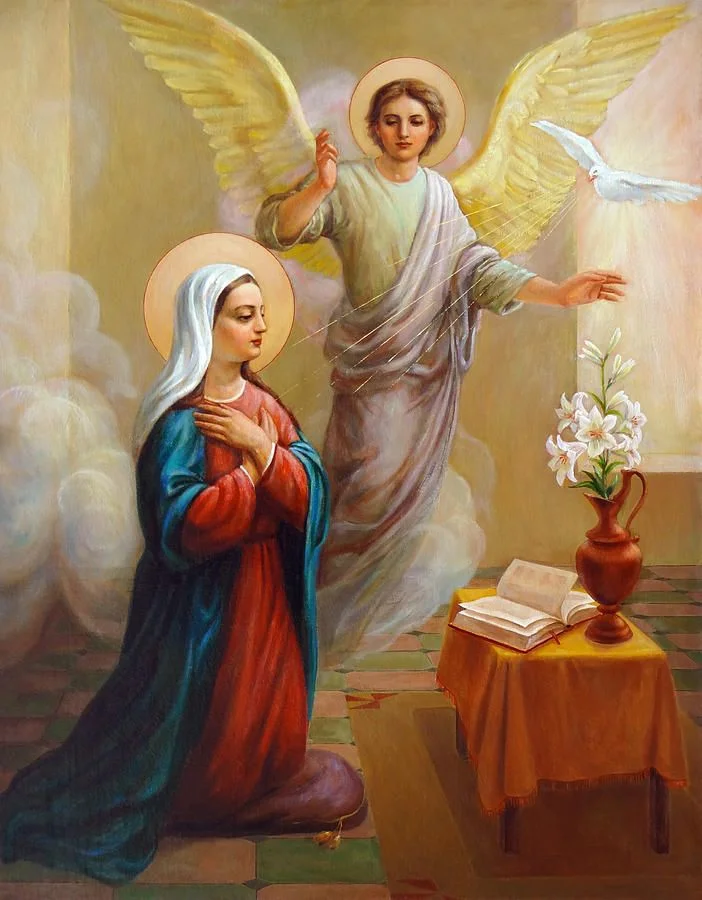
2οΈβ£ Biblical examples, such as the Annunciation, reveal Mary's unwavering faith and willingness to surrender to God's will. When the angel Gabriel visited her and announced that she would conceive Jesus through the Holy Spirit, she humbly responded, "Behold, I am the handmaid of the Lord; let it be to me according to your word" (Luke 1:38).
3οΈβ£ Mary's guidance is also found in the Catechism of the Catholic Church, which states, "Mary's prayer is revealed to us at the dawning of the fullness of time" (CCC 2617). Her prayers and intercession can help us discern God's will and align ourselves with His divine plan.
4οΈβ£ Just as Mary journeyed to Bethlehem to give birth to Jesus, she accompanies us on our own journey of faith. She understands our struggles, fears, and joys, and her loving guidance can lead us closer to God.
5οΈβ£ One of the most powerful ways to seek Mary's guidance is through the Rosary. This beautiful prayer allows us to meditate on the mysteries of Christ's life while seeking Mary's intercession. As we contemplate the mysteries, we can ask for her guidance in discerning God's will for our lives.
6οΈβ£ The Rosary offers us a direct connection to Mary's heart, enabling us to share our deepest desires, questions, and concerns with her. Through this prayer, we can entrust our lives to her loving care and seek her guidance in finding God's will.
7οΈβ£ The saints of the Catholic Church also recognized Mary's role in guiding them to discover God's will. Saint Teresa of Avila, a Doctor of the Church, famously said, "To other Saints, Our Lord seems to have given power to help us in some special necessityβbut to this Saint, I know by experience, He has given the power to help us in all."
8οΈβ£ The example of Mary's guidance can be seen in the Wedding at Cana, where she interceded on behalf of the couple who ran out of wine. She turned to Jesus and said, "They have no wine" (John 2:3). Her words prompted Jesus to perform His first miracle, demonstrating her intercession and influence in finding solutions to our needs.
9οΈβ£ The Catholic Church teaches that Mary, as the "Mother of the Church," continues to guide and intercede for all believers. The Second Vatican Council declared, "The Mother of Jesus in the glory which she possesses in body and soul in heaven is the image and beginning of the Church as it is to be perfected in the world to come" (Lumen Gentium 68).
π Mary's guidance is not limited to specific situations, but encompasses every aspect of our lives. Whether it be discerning our vocation, making important decisions, or seeking peace and comfort, Mary is there to lead us towards God's will.
1οΈβ£1οΈβ£ As we open our hearts to Mary's guidance, it is essential to remember that she always leads us to Jesus. Just as she instructed the servants at the Wedding at Cana to "Do whatever He tells you" (John 2:5), she encourages us to trust in Jesus and follow His teachings.
1οΈβ£2οΈβ£ The bond between Mary and her Son is inseparable, and by seeking her guidance, we are ultimately seeking a deeper connection with Jesus. She desires to bring us closer to Him and to help us discover our true purpose in life.
1οΈβ£3οΈβ£ Through prayer, we can invite Mary into our lives and ask for her guidance in finding God's will. As we develop a personal relationship with her, we can experience the joy and peace that come from aligning our lives with God's plan.
1οΈβ£4οΈβ£ The path to discovering God's will may not always be clear or easy, but with Mary's guidance, we can navigate through the uncertainties and challenges. Her steadfast love and intercession provide us with the strength and courage to seek and embrace God's plan for our lives.
1οΈβ£5οΈβ£ In conclusion, the Virgin Mary, Mother of God, offers us indispensable guidance in finding God's will for our lives. Through her example of faith, her intercession, and her presence in our lives, she helps us align ourselves with God's divine purpose. Let us humbly and wholeheartedly turn to Mary, seeking her guidance and entrusting our lives to her care. How have you experienced Mary's guidance in your own life? What are your thoughts on her role in helping us discover God's will?
Updated at: 2025-06-23 06:50:02 (5 months ago by Melkisedeck Leon Shine)
```htmlIntroduction: This article explores the significance of Mary, the Mother of Jesus, within the Catholic faith, focusing on her role as a model of faith, an intercessor, and a guide through life's complexities. Key concepts examined include Marian devotion, the theological understanding of Mary's role, and the application of Marian principles to personal spiritual growth. We will analyze her life and teachings within established theological frameworks to understand her influence and relevance in contemporary life.
Mary's Theological Significance and Exemplary Life: Mary's unique position as the Theotokos (God-bearer) is central to Catholic theology. Her unwavering faith and obedience to God's will, as depicted in biblical accounts and theological interpretations, exemplify the virtues of humility, piety, and complete surrender to divine providence. This resonates with concepts of kenosis (self-emptying) and theosis (deification) found in Eastern Orthodox theology, highlighting a path towards spiritual transformation through selfless devotion.
Mary as Intercessor and Advocate: The Catholic Church teaches that Mary, as the Mother of God, intercedes on behalf of humanity before her Son, Jesus Christ. This intercession is not based on a co-equal power structure but on her unique relationship with Christ and her profound compassion for humanity. This concept aligns with the sociological understanding of advocacy, where a trusted figure acts as a bridge between individuals and systems of power. Mary's intercession serves as a source of comfort and hope, strengthening believers' faith and encouraging perseverance.
Navigating Adversity through Marian Models: Mary's life, as understood through scripture and tradition, was filled with both joy and sorrow. Her perseverance amidst hardship, particularly during the crucifixion of her son, offers a potent example of faith amidst suffering. Drawing on psychological frameworks such as Viktor Frankl's logotherapy, which emphasizes finding meaning in suffering, we can see Mary's unwavering faith as a guide for overcoming adversity. Her example inspires resilience and emphasizes the importance of maintaining faith and hope even in the face of overwhelming challenges.
Marian Devotions as Tools for Spiritual Growth: Devotions such as the Rosary, a meditative prayer focused on the life of Christ, provide a structured path towards spiritual development. The recitation of prayers and contemplation of the mysteries strengthens the believer's relationship with both Mary and Christ. This practice can be viewed through the lens of contemplative prayer, a method employed for centuries to enhance spiritual insight and cultivate a deeper relationship with the divine. Furthermore, the Rosary's repetitive nature aligns with cognitive psychology's understanding of the efficacy of repetition in memorization and internalization of key concepts.
The Doctrines of the Immaculate Conception and the Assumption: The Immaculate Conception, declaring Mary's freedom from original sin, and the Assumption, affirming her bodily ascension into heaven, are key dogmas that highlight Mary's unique relationship with God. These doctrines, while central to Catholic faith, invite theological reflection on the nature of grace, human nature, and the destiny of humanity. Their implications extend beyond purely theological discourse; they offer a powerful narrative of hope and redemption, particularly relevant in understanding the possibilities of human flourishing.
Marian Apparitions and Their Impact: The numerous reported apparitions of Mary throughout history, such as Lourdes and Fatima, offer instances where faith and experience converge. These events, while requiring careful discernment, have profoundly impacted countless individuals, inspiring conversions, acts of charity, and a renewed commitment to faith. The study of apparitions raises questions about the relationship between faith, experience, and the interpretation of religious phenomena.
Mary as Spiritual Mother and Guide: Catholic theology views Mary not just as the Mother of Jesus but also as the spiritual mother of humanity. This concept reflects the nurturing and protective aspect of motherhood, emphasizing guidance and support on the journey towards spiritual maturity. This role aligns with contemporary discussions of spiritual mentorship and the significance of intergenerational transmission of faith.
Mary's Fiat: A Model of Surrender and Obedience: Mary's "fiat," her complete surrender to God's will, is a powerful example of faith and obedience. This act of humble acceptance underscores the importance of trusting in God's plan, even amidst uncertainties and difficulties. This can be analyzed within the framework of existentialism, examining themes of freedom, responsibility, and acceptance of life's conditions.
Conclusion and Recommendations: Mary's life and teachings offer a rich tapestry of spiritual guidance and inspiration for navigating life's challenges. Her example encourages the development of faith, perseverance in adversity, and a deep relationship with God. Further research might explore the cross-cultural implications of Marian devotion, comparing and contrasting diverse expressions of Marian piety across different Catholic traditions and geographical contexts. Examining the psychological impact of Marian devotion on individuals facing specific challenges, such as grief or trauma, would also be a fruitful avenue for future studies. The application of Marian models within various therapeutic contexts could provide valuable insights into the intersection of faith and mental wellbeing. Moreover, exploring the role of Marian devotion in fostering social justice initiatives, given Maryβs association with compassion and care for the marginalized, presents another promising avenue for scholarly inquiry.
Reader Pool: How might a deeper understanding of Mary's role within various theological frameworks impact the application of Marian devotion in contemporary pastoral ministry?
Updated at: 2025-06-19 15:28:27 (6 months ago by Melkisedeck Leon Shine)
```htmlIntroduction: A Framework for Understanding Grief and Consolation
Grief, an inevitable facet of the human experience, presents a profound emotional and spiritual challenge. This exploration delves into the profound sorrows of the Virgin Mary, a figure central to Catholic faith, offering a lens through which to understand and navigate personal grief. We will analyze the "Seven Sorrows of Mary," examining their theological significance and applying principles of grief counseling and spiritual resilience to offer pathways towards comfort and healing. Key concepts include the application of vicarious suffering (empathy through shared experience), the role of faith in coping mechanisms, and the utilization of religious narratives for emotional processing. The framework of this analysis will leverage the established principles of pastoral care and the psychological understanding of grief and mourning.
The Seven Sorrows of Mary: A Theological and Psychological Examination
The Catholic tradition identifies seven distinct sorrows experienced by Mary, each offering unique insights into the complexities of grief and the power of faith. These sorrows are not simply historical events; they are symbolic representations of common human experiences of loss, suffering, and uncertainty. We will investigate each sorrow using both theological interpretations and psychological models, like the KΓΌbler-Ross model of grief stages, to understand their resonance within individual experiences of mourning.
The Prophecy of Simeon: Anticipating Loss and Building Resilience
Simeon's prophecy, foretelling the suffering Mary would endure, introduces the concept of anticipatory grief β the emotional preparation for an impending loss. This illustrates the importance of proactive coping strategies in facing difficult situations. The narrative suggests a model of faith-based resilience, where acceptance of impending hardship allows for emotional preparation and strengthens spiritual fortitude.
The Flight into Egypt: Navigating Trauma and Finding Sanctuary
The flight into Egypt, a harrowing journey under duress, exemplifies the impact of trauma on mental well-being. Applying principles of trauma-informed care, we can view Mary's experience as a model of seeking refuge, both physically and spiritually. Her reliance on faith during displacement highlights the importance of finding a secure base amid upheaval, a key element in therapeutic interventions for trauma survivors.
The Loss of the Child Jesus in the Temple: Confronting Anxiety and Maintaining Faith
Mary's anguish at losing Jesus temporarily reflects the universal experience of parental anxiety and the fear of loss. This episode underscores the importance of maintaining hope and faith, even when faced with moments of uncertainty and intense emotional distress. The eventual reunion showcases the enduring nature of faith and its capacity to guide through times of crisis.
Mary's Encounter with Jesus on the Way to Calvary: Vicarious Suffering and Empathetic Connection
Mary's shared suffering with Jesus, witnessing his agonizing journey to crucifixion, exemplifies the concept of vicarious suffering β the capacity to empathize with and share the pain of another. This highlights the importance of compassion and shared experience in the healing process. This event, central to the narrative of Christian redemption, emphasizes the power of solidarity in suffering.
The Crucifixion: Contemplating Sacrifice and Finding Meaning in Loss
The crucifixion is a pivotal moment of ultimate sacrifice and profound loss. Maryβs unwavering presence at the foot of the cross offers a powerful example of enduring love and faith amidst unimaginable grief. This moment can be analyzed through the lens of meaning-making in the context of grief; finding purpose and understanding in the face of seemingly senseless tragedy. The concept of acceptance as a stage of grief is evident here.
The Deposition from the Cross and the Burial of Jesus: Processing Bereavement and Embracing Hope
The deposition and burial represent the culmination of Mary's sorrow, mirroring the stages of bereavement: the numbness, the intense emotional pain, and the beginning stages of acceptance. Here, the narrative underscores the importance of ritual and tradition in processing grief, finding solace in community, and allowing for the necessary time for mourning. Furthermore, the faith-based hope for resurrection and eternal life offers a model for finding meaning beyond earthly loss.
Finding Comfort and Guidance: Applying Mary's Example to Personal Journeys of Grief
Mary's experiences serve as a powerful testament to the human capacity for resilience and faith in the face of overwhelming grief. By studying her journey through the lens of various therapeutic models, we can extract practical applications for our own lives. Understanding the different stages of grief, practicing self-compassion, and seeking support are crucial elements in managing grief effectively. Furthermore, faith-based coping mechanisms, as demonstrated by Mary, can provide a significant source of comfort and strength.
Conclusion: Reflection, Application, and Future Directions
This exploration of Maryβs sorrows reveals a profound interplay between theological understanding and psychological frameworks for navigating grief. Mary's unwavering faith and resilience serve as a source of inspiration, demonstrating the power of spiritual support, community engagement, and the acceptance of suffering in the healing process. This analysis suggests that integrating faith-based approaches into grief counseling, trauma-informed care, and pastoral guidance could enhance the effectiveness of existing support systems. Future research could explore the specific impact of religious narratives on grief processing, comparing diverse faith traditions and their approaches to comforting those who mourn. Further investigation into the cross-cultural relevance of Mary's sorrows and their application in different contexts would broaden our understanding of this topic. The application of qualitative research methodologies, such as narrative inquiry, could offer richer insights into individual experiences of grief and the role of faith in the healing process.
Reader Pool: How can the insights gained from analyzing Maryβs sorrows inform the development of more holistic and effective grief support systems?
```
Updated at: 2025-06-05 11:19:25 (6 months ago by Melkisedeck Leon Shine)
This article examines the multifaceted role of Mary, the Mother of Jesus, within the Catholic theological framework. We will explore key Marian dogmas and their implications, applying relevant theological principles and models to illuminate Mary's enduring significance for the Church and individual believers. Central concepts include the Immaculate Conception, the doctrine of mediation, and the theological understanding of motherhood within the context of salvation history.
1. The Immaculate Conception: A Foundation for Mary's Unique Vocation: The dogma of the Immaculate Conception posits that Mary was preserved from original sin from the first moment of her conception. This isn't merely a historical event; it's a theological statement about her unique preparation for her role as Theotokos, the God-bearer. This preemptive grace, according to the doctrine of prevenient grace, highlights Mary's complete receptivity to God's divine will, making her the ideal vessel for the Incarnation. Applying the concept of divine election, we see Mary as chosen, not for her inherent merit, but for God's sovereign plan of salvation. This unique status sets the stage for her subsequent roles within salvation history.
2. The Fiat of Mary: A Model of Humility and Obedience: Mary's "fiat," her "yes" to the angel Gabriel's annunciation (Luke 1:38), is a pivotal moment in Christian theology. This act of perfect obedience, understood through the lens of the virtue ethics, exemplifies the ultimate surrender of self to God's plan. Mary's willingness, not without apprehension (Luke 1:34), is not passive acquiescence but an active choice rooted in faith and trust. It provides a powerful example of the necessary response to God's call for all believers, highlighting the importance of humility and obedience in living out one's faith. This obedience becomes a model for the entire Church, demonstrating that salvation is fundamentally Godβs initiative and that our response is a participation in Godβs grace.
3. Mary, Mother of Jesus and Spiritual Mother of the Church: The title "Mother of God" (Theotokos) affirms Mary's central role in the Incarnation. Extending this role, the Catholic Church recognizes Mary as the spiritual Mother of the Church, a concept elaborated through the lens of ecclesiology. Jesus' entrustment of his mother to John, and implicitly to all believers, at the foot of the cross (John 19:26-27) exemplifies this. This spiritual motherhood isn't merely metaphorical; it reflects Mary's ongoing intercession and her role in guiding the Church towards Christ. This concept utilizes the maternal metaphor, not in a biological sense, but as a spiritual reality, emphasizing the nurturing and protective aspects of Mary's relationship to the Church and individual believers.
4. Mary's Intercessory Role: Mediation and the Economy of Salvation: The Catholic tradition holds that Mary acts as a mediatrix of grace. This doesn't diminish the role of Christ as the sole mediator between God and humanity but understands Mary's intercession within the broader economy of salvation. Her role is subordinate to Christ's; she presents our prayers to him, acting as an advocate, using the principles of sacramental theology, which involves the participation of earthly realities in the divine. The wedding at Cana (John 2:1-11) serves as an illustrative example of this intercessory power, showcasing her influence within the earthly events leading to the revelation of Jesus' divine nature.
5. The Assumption: The Glorification of Mary and Eschatological Hope: The dogma of the Assumption asserts that Mary was taken, body and soul, into heaven. The Assumption, understood within the framework of eschatology, signifies the ultimate triumph of grace and the promise of resurrection for all believers. It highlights Mary's complete union with her Son and prefigures the hope of the final resurrection and the beatific vision for the faithful. This dogma signifies Maryβs unique role in Godβs plan and foreshadows the future of humanity β a participation in the divine life.
Conclusion and Recommendations: This exploration of Mary's role reveals her significance as a pivotal figure within Catholic theology and spirituality. Her life and actions, understood through various theological lenses, offer models of faith, obedience, and intercessory prayer. Further research could explore comparative analyses of Marian devotion across different Christian denominations, examining the variations in theological interpretations and their cultural expressions. The implications of Marian theology extend to contemporary pastoral practice, encouraging further study on its relevance in areas such as spiritual guidance and fostering devotion in the modern world. Understanding Mary's role can also enrich our understanding of God's grace and human participation in salvation, offering comfort and inspiration to believers seeking a deeper connection with God.
Reader Pool: What are the potential limitations of relying solely on the Marian paradigm in understanding the broader theological landscape of the Christian faith, and how can such limitations be addressed in a balanced approach to theological study?
Updated at: 2025-06-05 10:18:40 (6 months ago by Melkisedeck Leon Shine)
This essay explores the life of Mary, mother of Jesus, within a theological framework, examining key events and their interpretations across various theological and historical lenses. We will define key concepts such as Immaculate Conception, Incarnation, and Intercession to provide a clear understanding of the discussed phenomena. The analysis will delve into the significance of these events, their impact on Christian theology, and their relevance to contemporary faith.
1. The Immaculate Conception and the Incarnation: The doctrine of the Immaculate Conception, distinct from the conception of Jesus, posits Mary's freedom from original sin from the moment of her own conception. This concept, central to Marian theology, is understood through the lens of prevenient grace, a preemptive divine action preparing Mary for her role in the Incarnation. The Annunciation, the angel Gabriel's announcement of Mary's pregnancy, marks the pivotal moment of the Incarnation β the union of the divine and human natures in the person of Jesus Christ. This event fundamentally alters the course of history, viewed as a transformative act within the framework of Soteriology, the study of salvation. The application of this theological understanding highlights the central role of grace in God's plan for humanity's redemption.
2. Mary's Faith and Obedience as Exemplars: Mary's response to the Annunciation, "Behold, I am the handmaid of the Lord; let it be to me according to your word," exemplifies complete faith and obedience to God's will. This act of surrender, interpreted through the lens of kenotic theology (the self-emptying of Christ), reflects a profound trust in divine providence. This obedience, in conjunction with the miraculous nature of the Incarnation, serves as a powerful model of faith for believers, highlighting the importance of surrendering personal will to Godβs plan.
3. Miracles Associated with Mary and their Interpretations: The Visitation, Mary's visit to Elizabeth, showcases the power of Mary's presence. John the Baptist's leaping in Elizabeth's womb is interpreted as a sign of the Holy Spirit's work. The wedding at Cana, where Jesus turns water into wine at Mary's request, highlights her role as intercessor and reveals the close relationship between mother and son. These events, analyzed through the prism of miracles as acts demonstrating divine power, are interpreted as confirmations of Mary's divine favor and her pivotal role in salvation history. The application of miracle narratives offers comfort and hope to believers, demonstrating God's ongoing intervention in the world.
4. Marian Apparitions and Devotion: The reported apparitions of Mary at Lourdes and other locations demonstrate the ongoing devotion to Mary and highlight the importance of religious experience in shaping faith. These events, while interpreted differently within the theological spectrum, strengthen faith for believers and illustrate the persistence of Marian devotion throughout history. The analysis of these apparitions requires a nuanced approach considering both historical and theological perspectives, acknowledging the significance of individual faith narratives while recognizing the need for critical assessment.
5. Mary's Role in Redemption and Universal Motherhood: The theological concept of Mary as the "New Eve" counters the narrative of Eve's disobedience in Genesis. This interpretation portrays Mary as reversing the consequences of original sin through her faith and obedience. Her role as mother of all believers, as depicted in John 19:26-27, emphasizes her universal motherhood and her encompassing love. This perspective utilizes the typology method in biblical interpretation, tracing parallels between Old and New Testament figures to illuminate theological themes. Applying this typology shows how Mary's actions and role serve as a powerful symbol of Godβs grace and redemption.
6. The Rosary and Marian Devotion: The Rosary, a traditional Catholic devotion, utilizes the meditative repetition of prayers and reflections on the life of Christ. This act of devotion, understood through the framework of spiritual disciplines, strengthens faith and enhances the relationship between believers and the divine. Analyzing the practice of the Rosary highlights the importance of contemplative prayer and its role in fostering personal faith and promoting a deeper understanding of Christian theology. Its practical application promotes spiritual growth and fosters a closer connection with the Divine.
7. The Perpetual Virginity of Mary: The doctrine of Mary's perpetual virginity asserts her virginity before, during, and after the birth of Jesus. This doctrine, often debated across theological traditions, holds significant theological implications for understanding the nature of Christ and the divine plan of salvation. The application of this concept requires careful consideration of historical and theological perspectives, understanding that interpretations vary among different Christian denominations.
Conclusions and Recommendations: The examination of Mary's life reveals a complex interplay of theological interpretations and historical accounts. While the miraculous aspects of her life require careful scrutiny, the profound impact of her faith and obedience remains central to Christian theology. Further research should focus on interdisciplinary approaches, combining historical analysis with theological interpretation to better understand the development of Marian doctrines and their impact on Christian piety. This research must acknowledge the diversity of viewpoints on Marian theology, encouraging respectful dialogue between different theological perspectives. The findings of such research can inform pastoral practices and enhance the understanding of Mary's role within the broader context of Christian faith. The implications are far-reaching, influencing beliefs, practices, and ultimately, the way individuals experience their faith and their relationship with God.
Reader Pool: What are the implications of the different theological interpretations of Mary's life for contemporary understandings of faith and practice?
Updated at: 2025-06-21 20:39:40 (5 months ago by Melkisedeck Leon Shine)
```htmlIntroduction: This discourse examines the theological concept of Mary as the "New Eve," exploring her pivotal role in Christian theology as a counterpoint to Eve in the Genesis narrative. We will analyze key events in her life, drawing upon established theological principles and interpretations to illustrate her significance in restoring humanity's relationship with the divine. Key concepts include the Immaculate Conception, the doctrine of the Incarnation, and the Marian dogmas recognized by the Catholic Church. This analysis will apply these theological frameworks to understand Mary's influence on spiritual life, highlighting her intercession and maternal role.
The Immaculate Conception and Original Sin: The doctrine of the Immaculate Conception posits that Mary was conceived without original sin, a unique distinction among humanity. This freedom from original sin, understood through the lens of Augustinian theology on grace and the inherent human condition, made her a suitable vessel for the Incarnation. This concept, central to Catholic theology, establishes Mary's exceptional status within salvation history, allowing her to act as a mediator free from the limitations imposed on humanity by the Fall. This freedom directly combats the consequences of original sin that affected Eve and, subsequently, all humanity.
Mary's Fiat: Obedience and the Divine Plan: Mary's "fiat," her unwavering acceptance of the angel Gabriel's message (Luke 1:38), exemplifies perfect obedience to God's will. This act of complete surrender contrasts sharply with Eve's disobedience in the Garden of Eden. This theological comparison, often articulated through typological interpretations, positions Mary's obedience as crucial in reversing the effects of the Fall and initiating the process of redemption. Her 'yes' initiates God's salvific plan which is highlighted by various models of reconciliation.
The Annunciation: A Counterpoint to the Fall: The Annunciation, mirroring the events in the Garden of Eden, presents a powerful contrast. Whereas Eve's disobedience led to humanity's separation from God, Mary's obedience resulted in the Incarnation β God becoming human in the person of Jesus Christ. This pivotal event, foundational to Christian soteriology, offers a powerful counter-narrative to the Fall, highlighting the restorative power of faith and obedience.
Mary as the New Ark of the Covenant: The typology comparing Mary to the Ark of the Covenant (a sacred vessel containing God's presence in the Old Testament) emphasizes the sacred nature of her role. By carrying the Word made flesh within her, Mary embodies the presence of God among humanity. This analogy illuminates her status as a mediating figure between God and humanity, a bridge built to reconnect humanity with the divine after the rupture of the Fall. This concept highlights the importance of the sacred vessel that Mary represented.
The Visitation: A Manifestation of Grace: The Visitation, Mary's visit to Elizabeth, emphasizes the grace bestowed upon Mary and her role as a sanctifying force. Elizabeth's recognition of Mary's blessedness underscores Mary's holiness and the spiritual power she carries. This event showcases the powerful influence of Mary's holiness upon others, echoing the spread of grace through redemptive acts.
Mary's Intercession and Maternal Role: Throughout scripture and tradition, Mary is portrayed as a powerful intercessor. Her intercession at the wedding feast in Cana demonstrates her ability to bring humanity's needs before Christ. This role as an advocate demonstrates the profound love and compassion of Mary, emphasizing her desire to aid humanity in its path towards salvation. Her intercession is frequently described through the lens of maternal love and care.
Mary as Mother of Humanity: Jesus' entrusting of Mary to John (John 19:27) established Mary as the mother of all believers. This act extends Mary's maternal role beyond her biological son, encompassing all humanity. This maternal role provides a vital framework for understanding Mary's continued relationship with humanity, extending her love and care to believers worldwide.
Mary, Queen of Heaven and Earth: The title "Queen of Heaven and Earth" signifies Mary's exalted position in the heavenly realm and her reign alongside Christ in the kingdom of God. This title underscores her ultimate triumph over sin and death, emphasizing the victory achieved through Christ's sacrifice and Mary's unwavering faith.
The Assumption: A Sign of Hope and Redemption: The dogma of the Assumption, proclaiming Mary's bodily and soul ascension into heaven, affirms the ultimate triumph of grace over death and signifies the hope of eternal life promised to believers. This dogma offers encouragement to believers, providing a concrete example of the resurrection to which Christians aspire. This emphasizes the promises given by God to those in obedience and unwavering faith.
Devotional Practices: The Rosary and Marian Piety: Devotions like the Rosary serve as powerful means of connecting with Mary and drawing closer to God. By meditating on the life of Christ, the Rosary emphasizes Mary's contemplation of her Son and enables believers to unite their spiritual journey with Maryβs deep faith and reflection.
The Catechism and the Saints' Testimonies: The Catechism of the Catholic Church and the testimonies of countless saints affirm Mary's central role in salvation history. These emphasize the consistency of belief regarding Mary's significance and the enduring nature of her devotion within the Church. Their reverence reinforces her vital role within the Christian faith.
Personal Connection and Spiritual Growth: The concept of Mary as the New Eve is not merely a theological abstraction; it holds profound personal relevance for believers. Her example of faith, obedience, and unwavering love offers a roadmap for spiritual growth, guiding believers toward a deeper relationship with God.
Conclusion and Recommendations: This exploration of Mary as the New Eve reveals her profound significance in Christian theology and spirituality. Her life and actions, viewed through the lens of theological concepts and models, present a powerful counterpoint to the Fall, offering hope and redemption to humanity. Further research could explore comparative theology, analyzing other religious traditions' perspectives on similar archetypes of feminine figures associated with divine mediation. The impact of this research lies in reinforcing the theological significance of Mary and providing a framework for personal spiritual growth. This study's applicability extends to both theological studies and pastoral practice, deepening understanding and strengthening faith.
Reader Pool: Considering the theological interpretations presented, how might a comparative analysis of Mary's role with analogous figures in other religious traditions enhance our understanding of her significance within Christianity?
```
Updated at: 2025-06-19 15:28:20 (6 months ago by Melkisedeck Leon Shine)
This article explores the multifaceted theological concept of Mary's queenship within Catholic Christianity, examining its biblical foundations, theological interpretations, and spiritual significance. Key terms will be defined to ensure clarity. "Theotokos," meaning "God-bearer," is the title bestowed upon Mary, highlighting her unique role in the incarnation of Jesus Christ. "Queenship," in this context, refers not to earthly power, but to a spiritual and eschatological elevation reflecting Mary's unique relationship with God and her Son.
Theological Underpinnings of Mary's Elevated Status: The doctrine of the Assumption, while not explicitly stated in scripture, is a deeply held belief within the Catholic tradition. This dogma posits that Mary, having completed her earthly life, was taken body and soul into heaven, anticipating the general resurrection of all believers (Catechism of the Catholic Church). This event is interpreted as a singular participation in the victory of Christ over death and sin, reflecting her unparalleled holiness and closeness to God. This interpretation aligns with the concept of kenosis, the self-emptying of God in the incarnation, mirrored in Mary's complete surrender to God's will.
Biblical Interpretations and Patristic Tradition: While not directly stated, biblical passages offer symbolic interpretations supporting Mary's exalted status. The woman clothed with the sun in Revelation 12 is frequently understood as an allegorical representation of Mary, signifying her role as the mother of the Messiah. Further support arises from early Church Fathers such as St. Augustine and St. Jerome, who viewed Mary as the "New Eve," whose obedience counteracted the disobedience of Eve, thus restoring humanity's relationship with God. Their writings provide early evidence of the developing theological understanding of Maryβs unique position. This reflects the application of typological interpretation in biblical hermeneutics.
Mary as Intercessor and Spiritual Mother: Mary's queenship is intrinsically linked to her role as Theotokos and spiritual mother. Jesus' words from the cross ("Behold, your mother!") (John 19:27) establish Mary as an intercessor, a powerful advocate for humanity before God. This concept is rooted in the theology of mediation, where Mary's role is not to usurp God's power but to act as a conduit of grace, guiding believers in their spiritual journeys. This role is understood within the broader framework of ecclesiology, recognizing the Churchβs role in mediating God's grace.
Mary's Perpetual Virginity and its Significance: The doctrine of Mary's perpetual virginity, encompassing her virginity before, during, and after the birth of Jesus, further underscores her unique holiness and purity. This belief reinforces the idea of her complete dedication to God and highlights her role as a model of faith and obedience. It emphasizes the miraculous nature of Jesus' conception and birth, emphasizing the supernatural aspects of the Incarnation.
Marian Titles and Their Theological Implications: The various titles given to Mary, such as "Queen of Heaven," "Queen of All Creation," and "Queen of Saints," reflect the different facets of her elevated position. These titles, developed throughout centuries of theological reflection, express the depth and breadth of her role within the Christian faith. The use of such titles provides a rich tapestry for understanding her spiritual significance, as each title reflects specific aspects of her role. This is an example of how theological language shapes understanding and devotion.
Theological Significance and Implications: The devotion to Mary as Queen of Heaven is not intended to divert worship from God but to honor her unique place within the divine plan of salvation. This is understood through the principle of latria (worship of God alone) and dulia (veneration of saints). This distinction emphasizes the proper understanding of the relationship between divine and human devotion.
Conclusion and Recommendations: The theological understanding of Mary's queenship offers a profound reflection on the mysteries of faith, emphasizing her unique role in the salvation narrative. This complex theological concept invites further exploration, specifically researching the evolution of Marian titles and their impact on Catholic spirituality across diverse cultures. Understanding Mary's role within the broader context of systematic theology is crucial for a holistic understanding of the Catholic faith. This study could employ methods of historical theology, examining the development of these concepts over time, alongside systematic theology, analyzing their logical relationships within the entire theological system.
Reader Pool: Considering the complexities of Marian theology and the diversity of interpretations, what are the implications of the concept of Mary's queenship for contemporary interfaith dialogue?
Updated at: 2025-06-23 17:07:57 (5 months ago by Melkisedeck Leon Shine)
```htmlThis article explores the Miraculous Medal, a prominent sacramental in Roman Catholicism, examining its origins, symbolism, and theological implications within the framework of Marian devotion. Key concepts such as sacramental theology, Marian apparitions, and the role of intercession in Catholic belief will be defined and applied to understand the medal's significance. The article will also analyze historical accounts and theological perspectives to assess the claims surrounding its purported miraculous effects.
The Miraculous Medal's origins are rooted in a reported Marian apparition to Saint Catherine LabourΓ©, a Daughter of Charity, in 1830. This apparition, understood within the framework of private revelation, is a key element in understanding the medal's significance. The event, interpreted through the lens of mystical experience, led to the creation of the medal based on Mary's instructions. The medal's design itself is rich in symbolism. The depiction of Mary, Immaculate Conception, is central. The surrounding inscription, "O Mary, conceived without sin, pray for us who have recourse to thee," directly invokes her role as intercessor. This aligns with the Catholic understanding of Mary's role as the "Mother of God" and her unique position within the plan of salvation, as articulated in the Catechism of the Catholic Church (CCC). The application of this symbolism follows the tradition of religious iconography, employing visual cues to convey complex theological ideas. The design of the medal, according to the reported visionary experience, adheres to the principles of symbolic communication, translating divine messages into a tangible artifact.
The theological significance of the Miraculous Medal rests primarily on the concept of Marian intercession. This principle, deeply rooted in Catholic tradition, posits that Mary, as the Mother of God, can intercede on behalf of humanity before her Son, Jesus Christ. This intercession is not understood as a bypassing of Christ's mediatorship but rather as a cooperative act, enhancing the efficacy of prayer. The Gospel narrative, specifically the Wedding at Cana (John 2:1-11), is often cited as an example of Mary's effective intercession. The reported miracles associated with the medal are interpreted through this theological lens: the healings, conversions, and spiritual protections are attributed to God's grace, accessed through Mary's intercession. Applying the theological concept of sacramental efficacy, the medal serves as a tangible symbol of this intercession, fostering faith and devotion. This operates under the principle of sacramental theology, suggesting the outward sign (the medal) is linked to inward grace (God's action through Mary's intercession).
Numerous accounts of miraculous events attributed to the Miraculous Medal exist. These narratives, though often anecdotal, serve to illustrate the faith and devotion surrounding the sacramental. The conversion of Alphonse Ratisbonne, a prominent example, demonstrates the potential impact of faith and the power of personal encounters, often pivotal moments within narratives of religious conversion. While these accounts lack rigorous scientific evidence, they hold significant value in understanding the cultural and spiritual impact of the medal. Analysis of these narratives through the sociological lens of religious experience offers insights into the lived faith and the role of symbols in shaping religious identity. Furthermore, the historical analysis of testimonies should consider potential biases, including confirmation bias, and use methodologies such as content analysis to identify patterns and common themes. Historical scrutiny of these reports is essential to provide a balanced perspective on the claims.
The Second Vatican Council's teachings on Mary further illuminate the Miraculous Medal's theological context. The Council emphasized Mary's role in the salvation history, highlighting her "fiat" (consent) at the Annunciation and her participation in Christ's redemptive work. The medal, therefore, represents not just a personal devotion but also a participation in the broader theological narrative of salvation. The use of the medal acts as a form of Marian piety, aligning with contemporary Catholic teaching on the importance of honoring Mary while maintaining the central role of Christ. Applying the liturgical and devotional concepts within the Catholic faith enhances the understanding of the practices related to the use and reverence of the Miraculous Medal.
The Miraculous Medal, deeply embedded within Roman Catholic tradition and Marian devotion, holds significant theological and cultural importance. While scientifically verifiable evidence for miraculous claims is lacking, the medal's impact lies in its role as a symbol of faith, devotion, and the power of intercession. Further research could apply qualitative research methods, such as in-depth interviews with individuals who have experienced significant events related to the medal, to better understand its role in their faith journeys. This deeper analysis could contribute to a richer understanding of the lived religious experience and its connection to material objects of faith. Quantitative studies could also be conducted to explore correlations between medal usage and reported instances of positive change in the lives of believers. This multifaceted approach is necessary for a more comprehensive analysis that accounts for both the subjective and objective aspects of this complex phenomenon. Additionally, the implications of the medal's continued use and its cultural significance within diverse Catholic communities around the world merit further investigation.
Reader Pool: Considering the theological interpretations presented, and acknowledging the lack of empirical evidence for miraculous claims, how would you assess the ongoing significance and relevance of the Miraculous Medal within contemporary Catholic practice?
```